
Local Food Project
(Photo: Gary Bowden)
Reimagininghow Bullerfeeds itspeople
Reimagining how Buller feeds its people
Sparked by community concern around food security and guided by science and systems thinking, KNECT’s Local Food Project responds to a significant challenge: currently, 99.7% of Buller’s food supply is imported into the geographically isolated district.
Over the past three years, KNECT has worked alongside community members, stakeholders and national food system specialists to build a shared vision connecting local food production with improved community wellbeing, economic resilience, environmental health and long-term food security.
A key concept currently being developed by KNECT is a Food Resilience Hub designed to help activate both local food demand as well as supply. This is a social enterprise model to support local food production, processing, education and distribution from a shared site.
The project has the potential to provide a model for regional food resilience across the West Coast and beyond.
KNECT trustee Di Rossiter says “our ultimate long-term goal is to help transform Buller’s food system into one that nourishes people, strengthens the local economy and increases resilience for future generations.”
Questions and Answers
Buller currently imports almost all of its food supply (99.7%), leaving the district vulnerable to supply chain disruption, rising costs and reduced local food security. The Local Food Project aims to strengthen resilience by increasing local food production, processing and access while supporting healthier communities and a stronger local economy.
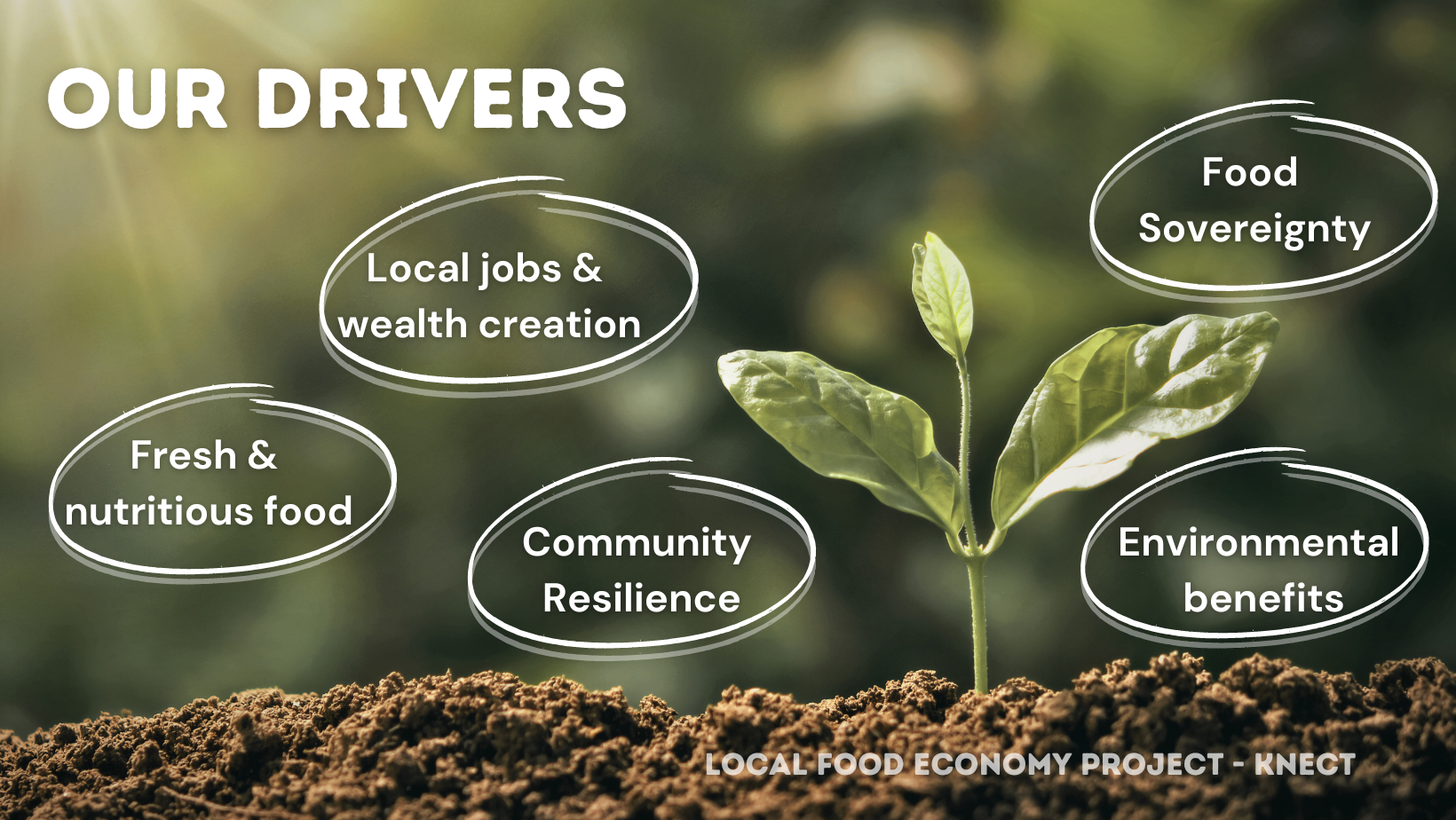
The project envisions a future where locally produced food is a normal part of everyday life in Buller Kawatiri. Long-term outcomes include:
- Poverty is not a barrier to accessing healthy food in Buller.
- $5 million of Buller’s annual food expenditure is redirected to the local food system and retained in the local economy each year.
- Households spend a minimum of 20% of their weekly food budget on locally produced food.
- Buller has a coordinated food resilience system in place capable of meeting its own food needs for at least 4 weeks.
- 200t CO2e is avoided through transportation reductions each year (equivalent to the annual carbon uptake of approximately 1,200 mature trees).
- Buller’s local food brand is recognised by >80% of local residents.
- Local food procurement for Buller’s restaurants, cafes, and caterers is the norm.
- A cross-sectoral collaboration model is embedded across established portfolios and has demonstrated the successful transition back to a local food system.
- Buller’s food system transition knowledge and intellectual property is in demand and actively exported to other regions and beyond.
- Buller’s local food system is part of our community identity and a shared source of pride.
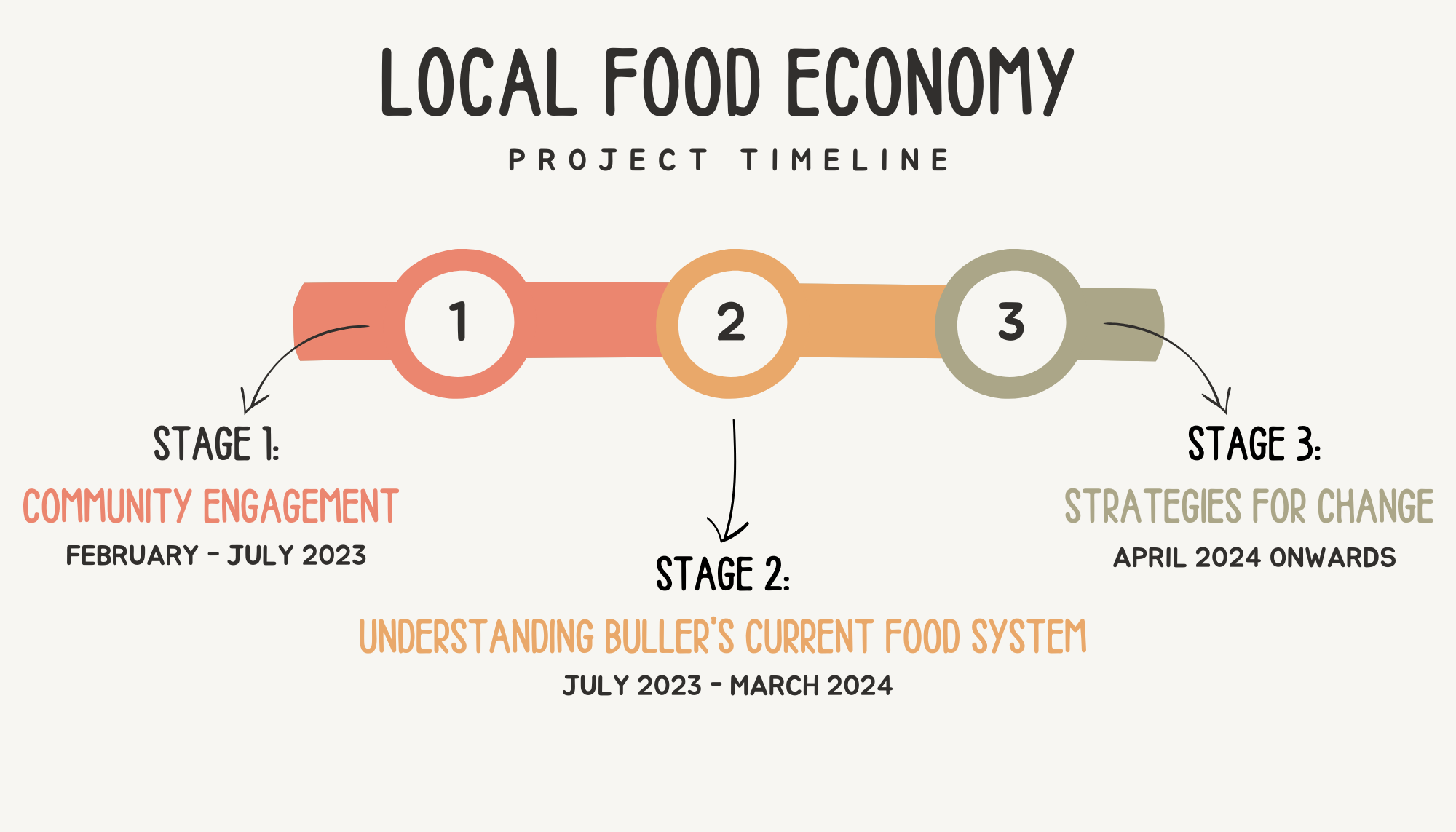
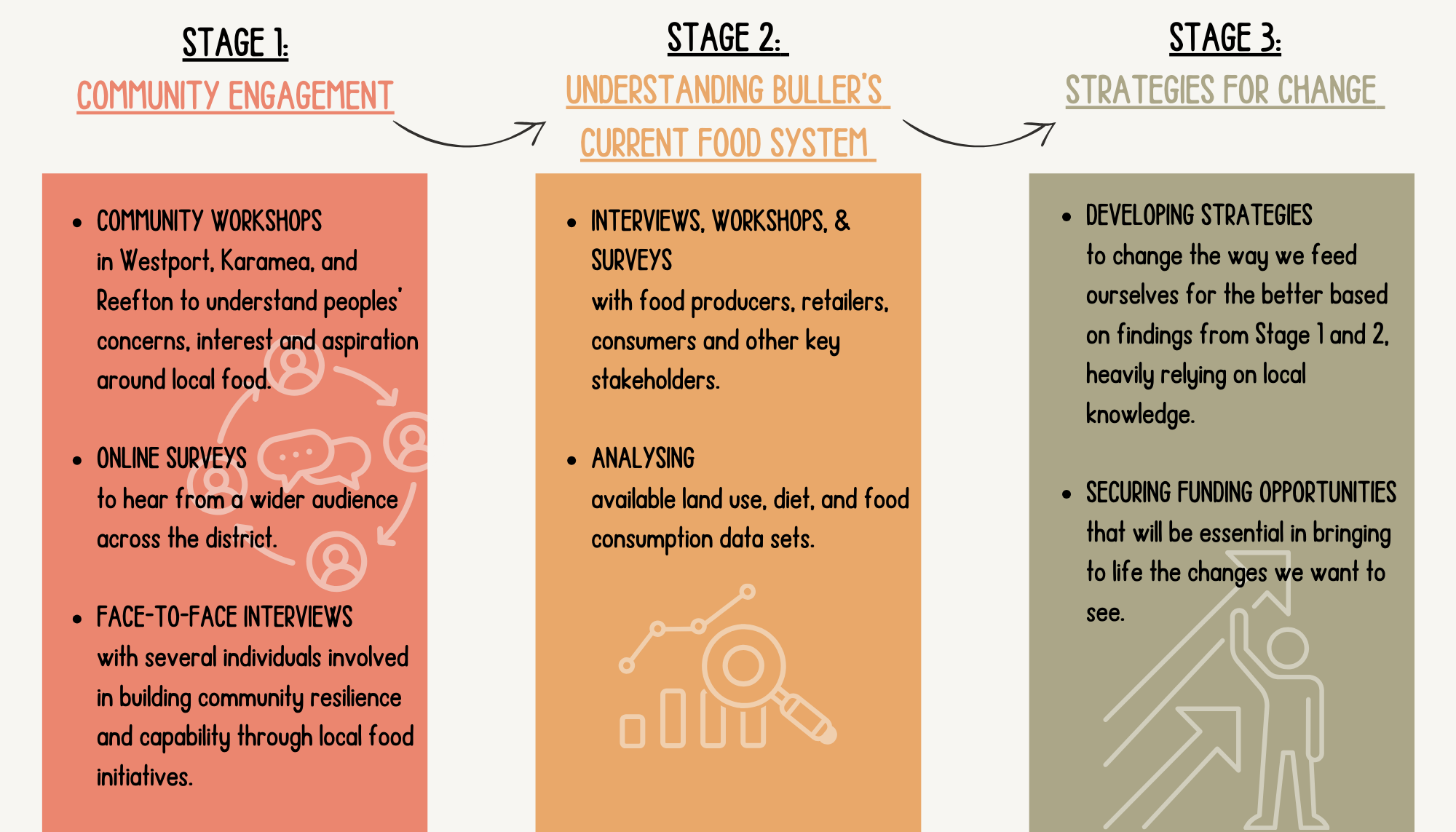
Over the past three years, the project has moved through the first three stages of the four well-defined stages of the project:
- Community engagement;
- Analysis of Buller’s current foodshed and food system;
- Strategic planning; and now
- Activation work.
This process has involved collaboration with community members, stakeholders, local producers and national food system specialists.
In 2026, KNECT has secured funding for a dedicated strategy activator for a period of 12 months. This role is already helping turn the research and groundwork into tangible outcomes to be realised by the community.
The proposed Food Resilience Hub is a long-term social enterprise concept designed to support local food production, processing, education and distribution from a shared site. The staged vision includes community gardens and orchards, processing facilities, education spaces, food retail opportunities and resilience infrastructure designed to support both community wellbeing and local economic development.
The project has the potential to become a model for regional food resilience, demonstrating how community-led collaboration, local food systems and regenerative practices can strengthen both environmental and economic outcomes. Long-term, the knowledge and systems developed through the project could support other regions across the West Coast and Aotearoa.