Local Food Economy
DevelopingLocal FoodSystems
Developing Local Food Systems
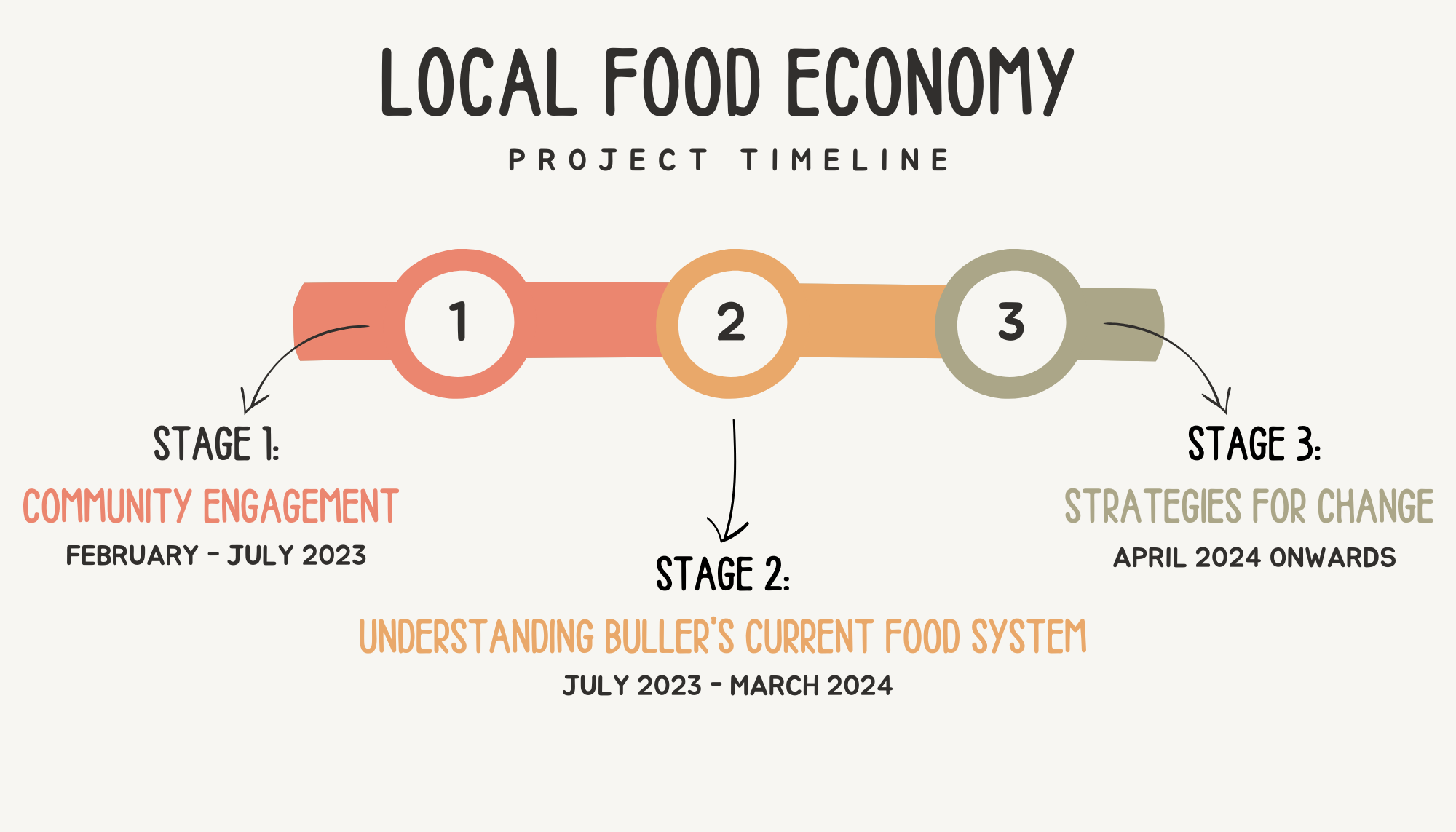
The Buller Kawatiri Local Food Project is a community-led initiative reimagining how the district feeds itself to create a stronger, more equitable, healthy, resilient, and sustainable local food system. Sparked by community thinking and support and guided by science and systems thinking, the project aims to reduce reliance on imported food—currently 99.7% of Buller’s food supply—by growing, processing, and sourcing more food locally. Through four well-defined stages—community engagement, analysis of the district’s current foodshed and food system, strategic planning, and now activation—the project has built a shared vision that connects local food production with improved community wellbeing, economic resilience, and environmental health.
After 2.5 years of groundwork, research, and collaboration with community, stakeholders, researchers, and national food system specialists, the team has developed strategies to activate both local food demand and supply. These include initiatives to promote food citizenship, support local growers and processors, and pilot practical solutions such as local food pledges, mapping, and distribution networks. The ultimate goal is to transform Buller’s food system into one that nourishes its people, regenerates its environment, and strengthens its local economy—providing a model for the wider West Coast and beyond.
Questions and Answers
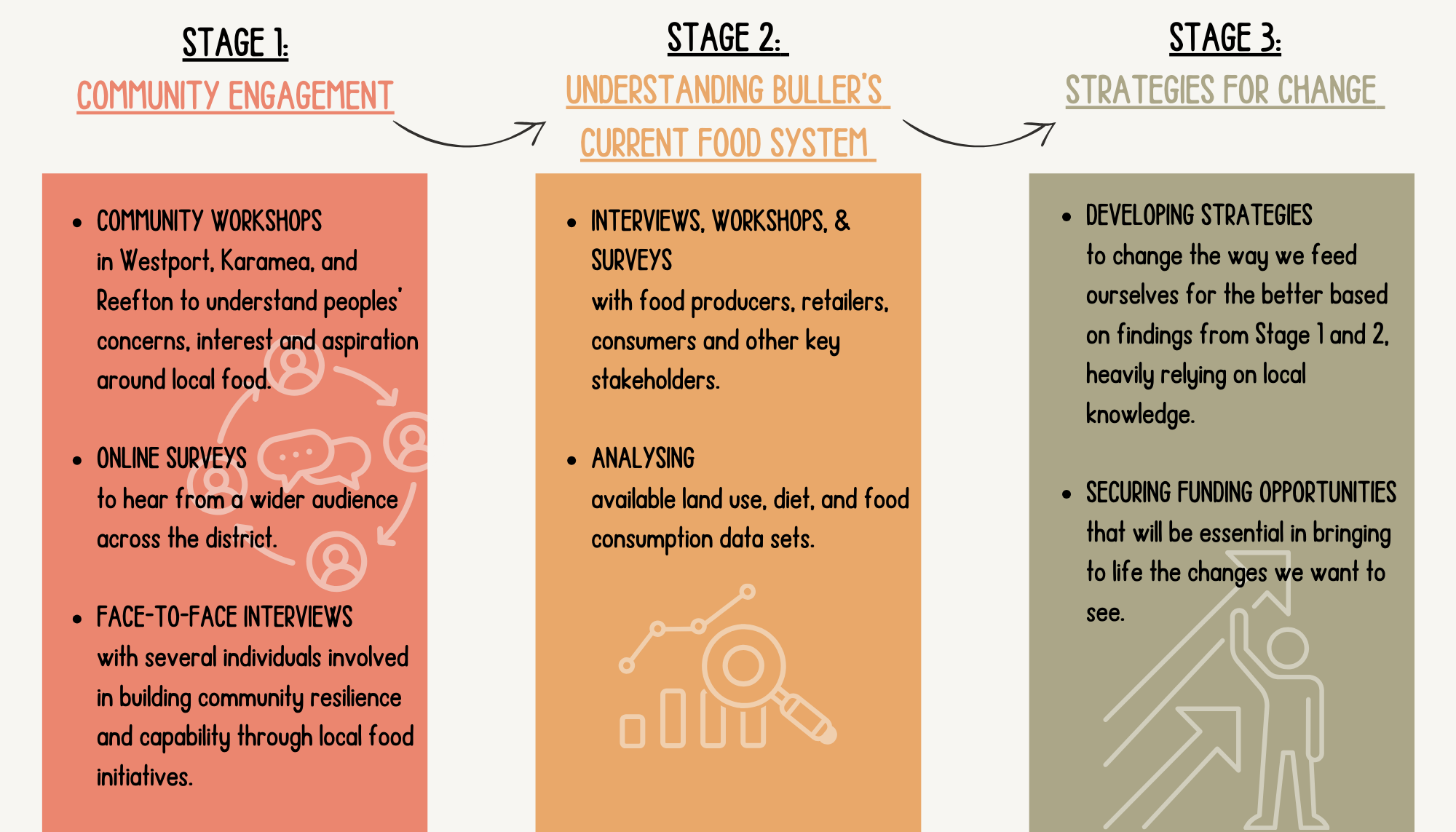
During the first 6 months of 2023, the Local Food Economy project sought to engage the Buller Kawatiri community in its aspirations around local food.
Community aspirations were inspiring. We learnt that across the district, there is strong support for the reversal of the unintended consequences of the global food system. Research and community conversations have also identified many emerging opportunities for enduring change that address the barriers to a thriving local food system. Rigorous analysis of these opportunities is now required to build on and test our thinking, and it is this analysis that forms the next stages in the LFE project. We have also formed a Community Reference Group so we can keep challenging our thinking and assumptions, and learning through local knowledge.
A Stage 1 progress report, which summarises the key findings from our conversations during this time, can be found here.
Working with food system specialists, Dr Niki Bould and Rhys Millar from Ahika, we analysed the way our food system works in Buller now.
The Foodshed and Food System Analysis for the Buller District reveals strong consumer motivations for supporting the local food economy, including:
-
- Supporting local people and the economy
- Enjoying freshness and better quality produce
- Knowing the source of their food
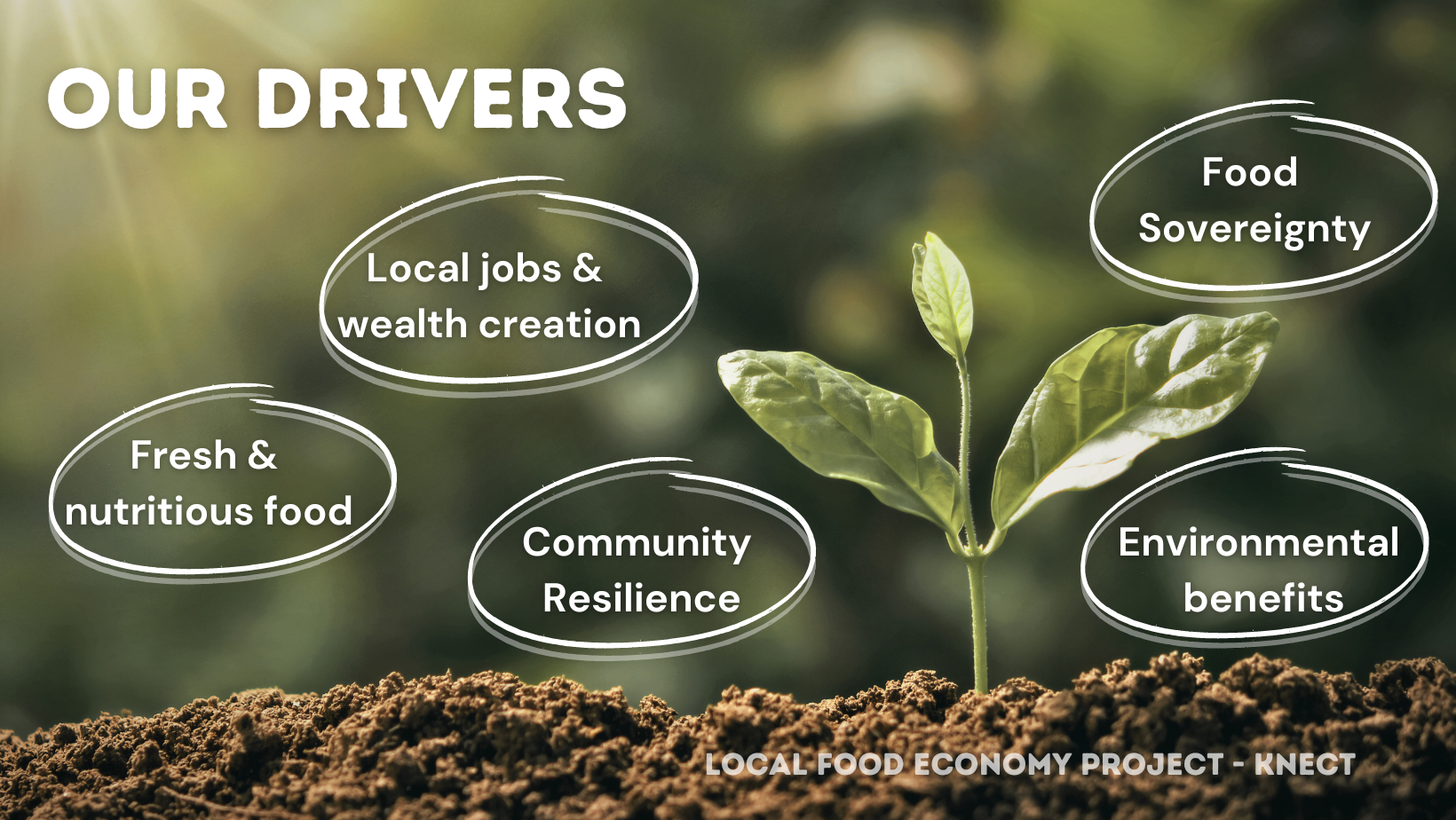
- Contributing to community sustainability and resilience
Despite current limitations in local food production, there is evident consumer receptivity to local products. The consumer survey indicates significant potential to leverage local food demand with increased availability, while several challenges persist and need to be addressed:
-
- Limited local food production: Approximately 99.66% of commercially produced food needed for Buller’s population is sourced from outside the district.
- Diverse producer landscape: Local food growers cater to various markets (local, national, international), with some expressing concerns about a limited growth potential of the local market.
- Processing infrastructure: Inadequate facilities for many food processing needs, requiring most local produce to be processed outside the district.
- Retailer difficulties: Local retailers face difficulties in sourcing local food. There is also confusion among consumers about what qualifies as ‘local food’, highlighting a need for improved branding and storytelling.
- Competing with imports: Local producers find it challenging to compete on price with cheaper imported alternatives, even when emphasizing ethical and sustainable practices.
For a detailed analysis, explore our Stage 2 progress report on Buller’s food shed and system analysis (click here).
Taking the findings from Stage 1 and Stage 2, and relying heavily on local knowledge, we will develop a set of prioritised strategies to change the way we feed ourselves for the better. We have started researching funding opportunities that will be essential in bringing to life the changes we want to see.
Project updates will be provided here as our work continues over the coming months and years.
We believe that, together, we have a chance to make our communities more resilient, healthier and happy places for everyone.
In collaboration with